At What Age Should a Child Start Abacus? A Grade-by-Grade Guide for Parents
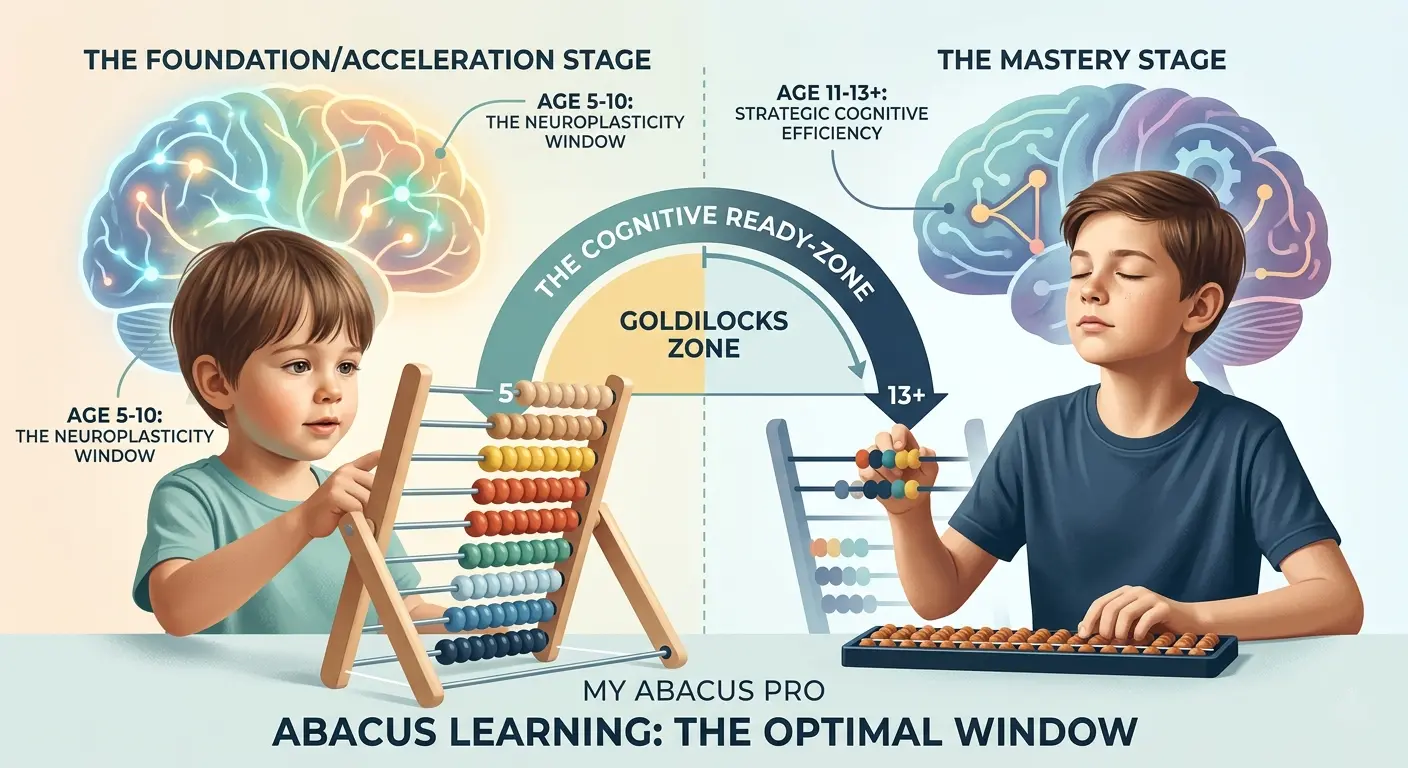
Timing is everything in neurodevelopment. As a parent in 2026, you are likely looking for the "Goldilocks Zone"—the window of time where your child is neither too young to understand the concepts nor too old to reap the maximum neurological benefits. While the abacus can be learned at any age, there is a specific biological window where it transforms from a simple math tool into a brain-shaping powerhouse. At My Abacus Pro, we often get asked: "Is my child ready?" The answer isn't just about their age in years, but about their Cognitive Readiness. Understanding the milestones of brain development helps you make an informed decision that will impact your child's academic confidence for a lifetime.
The "Plasticity Window" (Ages 5 to 13)
Neurologically speaking, the human brain undergoes its most significant structural changes before the age of 13. During this period, the Neuroplasticity of a child's brain is at its peak. This is the stage where the "wires" for spatial reasoning and visualization are being laid down. Starting abacus training during this window allows the child to develop the "Mental Screen" required for Anzan (Mental Abacus). After age 13, the brain begins a process called "synaptic pruning," where it hardens its existing pathways, making it significantly harder (though not impossible) to build the same high-speed visualization skills.Grade-by-Grade Readiness Guide
1. The Foundation Stage (Junior/Senior KG - Age 5-6)
At this age, the goal is Number Sense. A child should be able to count from 1 to 50 and understand the concept of quantity (e.g., knowing that five beads represent five objects). Starting here builds an early love for math, preventing "math phobia" before it even starts. The focus is purely on tactile movement and fun.2. The Acceleration Stage (Grades 1 to 4 - Age 7-10)
This is the Optimal Zone. Most of our most successful students start in Grade 2 or 3. At this stage, the child’s fine motor skills are developed enough to move beads with precision, and their concentration span is ready for 15-minute daily drills. This is the best time to activate the Left-Right Brain symmetry.3. The Mastery Stage (Grades 5 to 8 - Age 11-13)
For older children, the abacus becomes a tool for Academic Efficiency. They use it to handle the complex multi-step calculations found in middle school algebra and science. While the "Mental Screen" takes more effort to build at this age, the logical benefits for competitive exam preparation are massive.| Age Group | Developmental Focus | My Abacus Pro Goal |
|---|---|---|
| 5 - 6 Years | Tactile/Motor Skills | Removing Math Fear |
| 7 - 10 Years | Visual Imagery (Anzan) | Building the "Mental Screen" |
| 11 - 13 Years | Logical Speed | Competitive Exam Success |
| 14+ Years | Analytical Math | Refining Calculation Accuracy |
Does it ever get "Too Late"?
It is never too late to improve your math skills, but it can be late to build "photographic" mental math skills. If a student starts at age 15, they will still benefit from improved concentration and logical discipline, but they may struggle to achieve the same "lightning-fast" mental visualization as a 7-year-old. This is why we urge parents not to wait for "next year"—the biological window is moving every day.Conclusion: The Best Time is Now
In the 2026 educational landscape, being "good" at math isn't enough; being efficient is what counts. Regardless of whether your child is 6 or 12, the best time to start building their cognitive hardware is today. You are not just teaching them to count; you are giving them the gift of a sharper, faster, and more confident mind.Is Your Child in the "Golden Window"?
Don't let this critical developmental stage pass by. Join our next orientation and see how we tailor our levels to your child's specific grade and age. Check Batch Availability →Put these techniques into practice
Want to build the lightning-fast calculation skills mentioned in this article? Our specialized practice tools allow you to drill these specific formulas.
Used by 1,000+ students worldwide to master Soroban techniques.
Written By
Satish Mane (Abacus Trainer)
More in Parenting & Education
Continue your learning journey with these related articles.
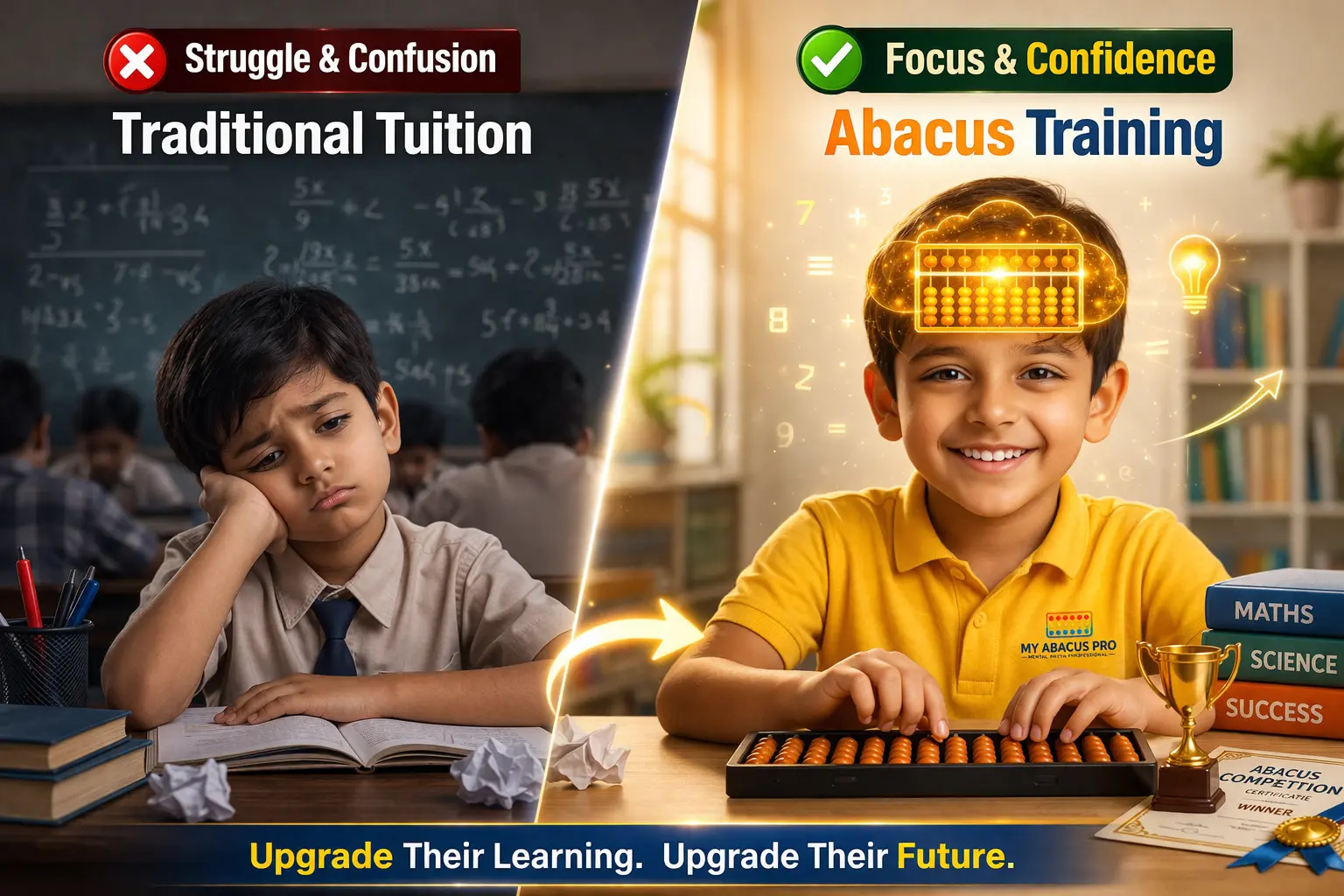
The "Mastermind" Secret: Why Indian Parents are Swapping Traditional Tuition for Abacus
Traditional math tuition often focuses on memorization and repetitive homework. Discover why the "Mastermind" secret of Abacus training is becoming the preferred choice for parents who want to build genuine cognitive power, focus, and long-term academic success.